


Carbon footprint, action plan, and CSR commitment
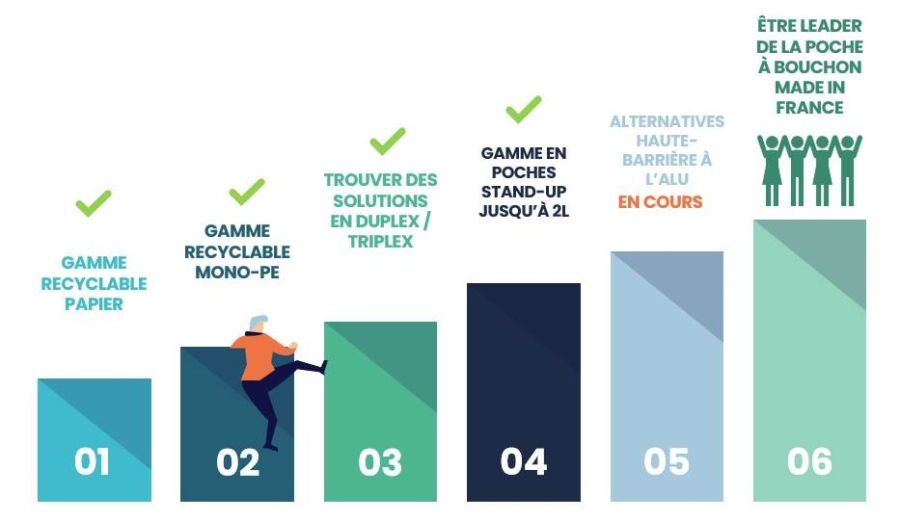
At Deltasacs, innovation goes beyond the technical performance of our flexible packaging. It is also reflected in our commitment to taking action for a more sustainable future.
The PPWR legislation, adopted by the European Union in early 2024, pursues five main objectives:
-
Make all packaging reusable or recyclable by 2030
-
Reduce (over) packaging and packaging weight
-
Integrate eco-design principles into packaging design
-
Reduce the complexity of packaging materials
-
Incorporate recycled content into plastic packaging
Why did Deltasacs carry out a carbon footprint assessment?
As a leading European manufacturer of stand up pouches (doypack) and hard bottom bags, Deltasacs is committed to taking concrete action to reduce its environmental impact.
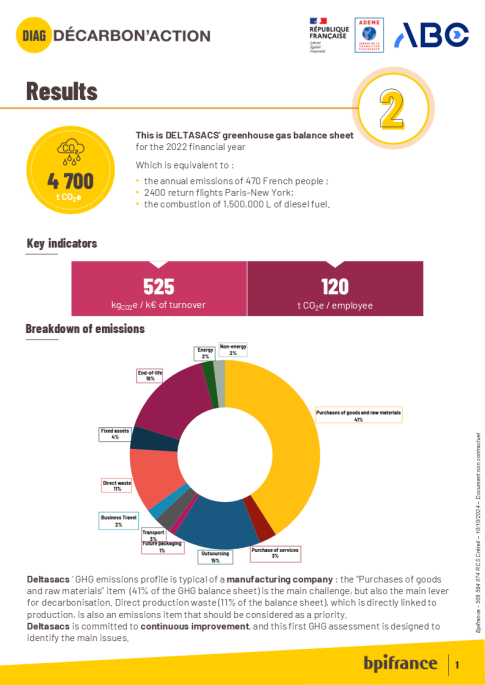
In 2022, we completed our first carbon footprint assessment as part of the Diag Décarbon’Action programme, backed by Bpifrance, ADEME and ABC, with expert support from the consultancy Smooth Change.
The goal was clear: measure our greenhouse gas (GHG) emissions to build a stronger, more targeted climate strategy. The assessment revealed 4,700 tonnes of CO₂ equivalent emissions over the year—a key milestone that helps us set priorities, accelerate progress, and move forward with even greater determination.
Emission hotspots identified in our carbon footprint assessment
Toward 2030: Reduce our greenhouse gas emissions by 20%
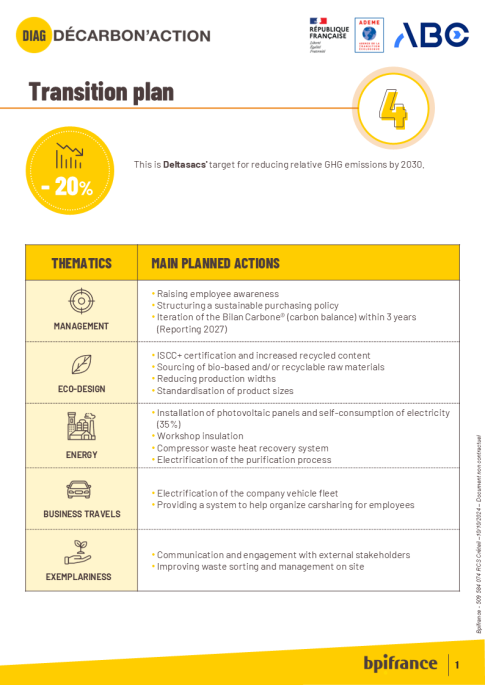
Deltasacs has set an ambitious course: cutting our relative GHG emissions by 20% by 2030. Reaching this target means turning commitment into clear and measurable action.
We are accelerating ecofriendly packaging development, increasing the share of recycled and bio-based materials (with ISCC+ certification) while optimising product formats to use resources more efficiently.
On the energy side, our roadmap includes the installation of solar panels, improved workshop insulation, and heat recovery from our industrial processes—practical solutions that support long-term performance.
An ESG strategy designed to boost environmental performance
The gradual electrification of our vehicle fleet and the rollout of an internal carpooling scheme are also key parts of our action plan. But beyond technical measures, our ESG commitment is driven by what matters most: the engagement of our teams.
That is why we are strengthening a responsible purchasing policy, raising awareness across the company, and planning a new carbon footprint assessment by 2027 to track our progress and keep improving.
Deltasacs: An industrial player committed to the ecological transition
Our ESG approach and low-carbon transition plan are part of a broader commitment to responsibility. Because we believe industrial performance and environmental leadership go hand in hand, we are making the reduction of our carbon footprint a strategic, unifying priority.
At Deltasacs, innovation also means protecting what matters.